Showing posts with label hummingbirds. Show all posts

Tuesday, March 7, 2017

Birdwatching Photography in Laguna de Apoyo

Although birds are not always easily photographed in the wild, some people are up for the challenge. The following photos were taken by Lars Saenger, who spent two weeks studying at Apoyo Spanish School and watching nature inside the Laguna de Apoyo Nature Reserve. These photos demonstrate that the area is great for practicing nature photography.
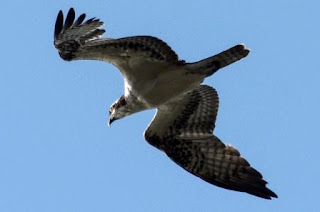
Osprey
Osprey (Pandion haliaetus

Osprey (Pandion haliaetus) populations found in Nicaragua do not breed locally. The entire Osprey population of Nicaragua is regarded as migratory, nesting further north. Some birds pass through Nicaragua on migratory trips, but many choose the ample aquatic ecosystems to fish in Nicaragua until moving northward for another reproductive period. Ospreys feed almost entirely on fish plucked from the surface of water. Even though the Osprey does not nest in Nicaragua, there are always a few individuals present in Laguna de Apoyo, most likely immatures that remain behind in their southern range until ready for reproduction.

Hoffmann's Woodpecker
Hoffmann's Woodpecker (Melanerpes hoffmannii)
Most of the bird species found in Nicaragua have wide ranges, often spanning many countries. Some, however, are found in more restrictive ranges, within an ecosystem. One such bird species, Hoffmann's Woodpecker (Melanerpes hoffmannii), is located only in Honduras, Nicaragua, and Costa Rica. The species prospers in both open areas with plenty of trees and natural forest areas in the tropical dry forest region of Nicaragua. Laguna de Apoyo Nature Reserve is an ideal habitat for the bird, which is a close relative to and shares many superficial characteristics with the Red-Bellied Woodpecker (Melanerpes carolinus), a species common through much of the eastern United States. Hoffmann's Woodpecker is active in most areas of the reserve year-round, including both the deepest forest areas and built areas with houses.

birdwatching
Great-tailed Grackle (Quiscalus mexicanus)
Some birds prefer to inhabit areas without human influence, but others may be particularly attracted to humans. One bird that responds positively to human impacts on the forest is the Great-tailed Grackle (Quiscalus mexicanus). They tend to be active throughout the day, loud and ebullient, and many other species do not prosper in their presence. They are not found deep into the forest.

hummingbird
Cinnamon Hummingbird (Amazilia rutila), feeding on the nectar of Tabebuia rosea
Hummingbirds are always loved by birdwatchers. Their precise movements and delicate forms inspire awe among anyone who sees them. Among the most common hummingbird species in Laguna de Apoyo Nature Reserve is the Cinnamon Hummingbird (Amazilia rutila). It and other hummingbirds consume nectar from flowers, as everyone knows; what fewer people appreciate, however, is that hummingbirds also consume very small arthropods, which they may glean from the air. One example of such prey is the juvenile spiders, that may actually be transported by the wind. The Cinnamon Hummingbird will feed on tiny spiders, often gleaning them from foliage and flowers. This bird species is common particularly near humans, and is even found in peri-urban areas of Managua.

birdwatching in Nicaragua
Boat-billed Flycatcher (Megarhynchus pitangua)
Many species of tyrant flycatchers have been documented in Laguna de Apoyo Nature Reserve, among them, the Boat-billed Flycatcher (Megarhynchus pitangua). At first glance, it resembles the Great Kiskadee (Pitangus sulfuratus), but without cinnamon wing-feathers, and with a much more formidable peak and distinctive calls. It can be found in open areas as well as within a relatively closed canopy.

motmot
Turquoise-brlowed Motmot (Eumomota superciliosa)
The bird most adored by Nicaraguans is the Turquoise-browed Motmot (Eumomota superciliosa). This lovely species is very common in Laguna de Apoyo Nature Reserve, likely because of the abundant sites for nesting available. The species makes nests in tunnels carved horizontally into loose clay and ash deposits in the steep banks in ravines and road cuts. This site may be among the best to find the species in the entire country.

Dusky-capped Flycatcher
Dusky-capped Flycatcher (Myiarchus tuberculifer)
Among the numerous species of tyrant flycatchers in Laguna de Apoyo Nature Reserve, is the Dusky-capped Flycatcher (Myiarchus tuberculifer). Its genus consists of several species, some of which are quite difficult to distinguish at a distance. It is common throughout the reserve.

Montezuma Oropendola
Montezuma Oropendola (Psarocolius montezuma)
Birdwatchers never tire of watching the Montezuma Oropendola (Psarocolius montezuma), especially around a nesting colony. Dozens of nests in the form of woven socks are constructed in a single tree, where the birds engage in highly social behavior among the nesting group. Nesting occurs during the dry season, sometimes starting as early as November, with as many as one hundred birds gathered into a single site! An oropendola colony is always a birdwatching paradise.

Please contact us for a birdwatching tour in Laguna de Apoyo Nature Reserve or anywhere in Nicaragua. We organize expeditions in all locations of the country, and we would love to take you!

birdwatching
Click on the "escudo" to contact us at Gaia.


Thursday, November 13, 2014

Birdwatching in Laguna de Apoyo Nature Reserve III-Land birds

As camera technologies advance, photography continues to become a more interesting option for birdwatching activities. Today, one does not have to be a professional or invest thousands into a hobby to take good pictures of birds. Many of our visitors at Estacion Biologica Laguna de Apoyo come especially for the birds, and some of them even take great photographs. Here, we present the second blog entry highlighting the photography of birdwatchers Jesse Bickley and Anna James.

kiskadee
Great Kiskadee (Pitangus sulfuratus) is very common in the Laguna de Apoyo Nature Reserve and throughout wooded areas in the Pacific region of Nicaragua. Photo Jesse Bickley and Anna James.

Ramphastos
The Keel-billed Toucan (Ramphastos sulfuratus) are always pleasant discoveries here, where they are easier heard than seen. Great photo shots of this species may be difficult, because they prefer forest canopy. Photo Jesse Bickley and Anna James.

birding
Long-tailed Manakins (Chiroxiphia linearis) males dance and sing to attract a mate. The senior male dances in tandem with a junior male who requires up to four years to reach sexual maturity. Photo Jesse Bickley and Anna James.

elegant trogon
The male Elegant Trogon (Trogon elegans) makes an unattractive growl but is quite a beauty to see. Photo Jesse Bickley and Anna James.
trogon
The Black-headed Trogon (Trogon melanocephalus) is quite common on the north side of Lake Apoyo, where Estacion Biologica is located. Photo Jesse Bickley and Anna James.

motmot
Our national bird is the Turquoise-browed Motmot (Eumomota superciliosa). The abundance of steep banks with loose, volcanic soils make Laguna de Apoyo Nature Reserve ideal habitat for this bird. Photo Jesse Bickley and Anna James.

eumomota superciliosa
The pendulum-like swing of the tail of the Turquoise-browed Motmot (Eumomota superciliosa) is thought to discourage predators. Photo Jesse Bickley and Anna James.


clay-colored thrush
The Clay-colored Thrush (Turdus grayi) acts and even sounds similarly to the American Robin of North America. Photo Jesse Bickley and Anna James.
Summer Tanager
Male Summer Tanager (Piranga rubra) make fill our forest with bright color about seven months per year. It accompanies hundreds of other birds in yearly migration, reproducing in North America. Photo Jesse Bickley and Anna James.
Amazilia
The red bill and rusty tail distinguish this bird as the Rufous-tailed Hummingbird (Amazilia tzacatl), much more common in Eastern Nicaragua than in the forests of Laguna de Apoyo Nature Reserve. Photo Jesse Bickley and Anna James.
Birdwatching
The Great Kiskadee is very common in forest edge throughout the Pacific region of Nicaragua. Photo Jesse Bickley and Anna James.
Chestnut-capped Warbler
The Chestnut-capped Warbler (Basileuterus delattrii) is the only year-round resident warbler of the reserve. Photo Jesse Bickley and Anna James.
Groove-billed Ani
Cuckoos such as the Groove-billed Ani (Crotophaga sulcirostris) have a distinctive smell which may serve to protect them from predation. Photo Jesse Bickley and Anna James.

Birding
The Montezuma Oropendola (Psarocolius montezuma) nest communally. Males and females divide the work around the nesting site. Photo Jesse Bickley and Anna James. 
birdwatching
No photo essay on birds in Nicaragua would be complete without the Black Vulture (Coragyps atratus), among the most visible of any bird in the country. Photo Jesse Bickley and Anna James.
Jesse and Anna also took some great photos of birds associated with Lake Apoyo, too. If you would like to schedule a birdwatching tour with one of our specialized birdwatching guides, please contact us!
Please contact us and let us know what you think of our blog, or post a comment below! 

You can help us keep nature wild in Nicaragua, by volunteering your time with us or making a small donation to support our projects in wild nature conservation.

Tropical Kingbird
Click on the "escudo" to contact us. 

Thursday, July 25, 2013

Wildlife Monitoring in Laguna de Apoyo

It is no secret to us who frequent Laguna de Apoyo Nature Reserve that it is under siege from several types of human activities. Forests disappear without anyone taking note and speaking out. Usually, this happens not in fell swoops of forest, but rather, one branch, or a small stem, at a time. Areas get cleared by surreptitious actions of hired workers, a little at a time. Trash and concrete slowly creep across what was jungle.
colibri

How this process, of conversion of land from wild jungle to farmland and summer homes and gardens, affeds wildlife on the scale it is conducted in Laguna de Apoyo, has not been tested much. Common sense would tell us that small alterations to the forest make big changes in the animals that live in it. But we live in a society where lies and misconstructions are stated and accepted as facts, so we set out to compare the fauna of different parts of the forests in Laguna de Apoyo.

mariposa
The title page of the presentation by three interns from Holland. Photo Pablo Somarriba.
 At FUNDECI/GAIA, we have been studying the impacts of human activity in the forests of Laguna de Apoyo Nature Reserve for some five years. The results are now being prepared for publication. A presentation of the results of the impacts on fruit-eating butterflies (family Nymphalidae) and hummingbirds (family Trochilidae) was made at Volcano Masaya National Park, Tuesday 23 July, 2013. Bart Verdicjk, Hessel van der Heide, and Max Schellekens, biology interns from Holland, produced the following videos on the process, which were presented along with results of the studies on butterfly and hummingbird communities in Laguna de Apoyo Nature Reserve.
Intern Max Schellekens presenting the results of butterfly studies while dozens of participants observe. Photo Pablo Somarriba.
These three interns collected data and then they analyzed data on hummingbirds and butterflies during the past five years in different locations in Laguna de Apoyo Nature Reserve. Their presentation was well-attended, not a single seat was found in the house!
Volcano Masaya National Park Director, Liliana Diaz, during an animated discussion after the presentations by the interns. Photo Pablo Somarriba.
A rising consciousness and concern for wild nature is seen in Nicaragua today. The young people of the area of Laguna de Apoyo, many of whom attend Instituto Augusto Flores Silva, made an important representation of the audience, which pleased us infinitely to see.
A standing-room-only crowd in the auditorium of Volcano Masaya National Park! Photo Pablo Somarriba.
The risks that wildlife face in Laguna de Apoyo Nature Reserve are enormous, and as many people recognized in the discussion, tourism provides important elements to a strategy to protect this beautiful natural site. Several professional tour guides were present as well, some of whom added important comments.
Las mariposas de la Laguna de Apoyo. Video Max Schellekens.

Los colibries de la Laguna de Apoyo. Video Max Schellekens.

butterflies
Click on the "escudo" to contact us.

Wednesday, July 10, 2013

Hummingbirds II: Amazilia cyanura/saucerrottei species complex

There are lots of interesting and important bird studies to be performed in Nicaragua, among them, issues regarding hummingbirds. What habitats hummingbirds prefer, and how human land use impacts each hummingbird species can be an important issue for Nicaragua, especially now that Nicaragua is developing rapidly. To make such analyses, however, identification of the hummingbirds is vital, but not always straightforward. Both the Blue-tailed hummingbird, Amazilia cyanura, and the Steely-vented Hummingbird, Amazilia saucerrottei, are reported for Nicaragua, although they are so similar that we don't trust any distinctions made in reports about them. Conservation science intern Bart Verdijck has been examining the populations of the species in Laguna de Apoyo Nature Reserve, to determine which is here and whether any distinctions can be made in the field, where supposedly, the two species occur together.
Blue tailed hummingbird
This hummingbird is lending us a few minutes of his time to further the knowledge about his species. Is he a Blue-tailed Hummingird (Amazilia cyanura) or a Steely-vented Hummingbird (Amazilia saucerrottei)? Photo Bart Verdijck.
Ten hummingbird species have been recorded in Laguna de Apoyo Nature Reserve to date. Some species are quite rare or even accidental, whereas others are very common. These two species, however, intrigue one in a special way, because little information exists on the two species in the same place.
Steely vented Hummingbird
FUNDECI/GAIA technician Elmer Nicaragua holds a hummingbird. Photo Bart Verdijck.
The intense urbanization all through the region means that hummingbird habitats are being altered rapidly. Without knowing what resources are required for year-round sustenance and reproduction of each species, we are gambling against the hummingbirds with every new forest cleared, building constructed, and parking lot paved. Which hummingbirds among the great diversity of the region will be lost?
Amazilia cyanura
Hummingbirds are easily captured by mist nets for study. Photo Bart Verdijck.
The overlapping ranges of A. cyanura and A. saucerrottei mean that resources upon which the two species depend must be divided somehow. Our first goal is to compare the abundances of these and other hummingbirds in each of several sites in Laguna de Apoyo Nature Reserve, to look for trends according to forest structures and land use patterns.
Amazilia saucerrottei
Elmer examines the tail and wing colors on this hummingbird. Photo Bart Verdijck.
In addition to comparing A. cyanura and A. saucerrottei habitat preferences and abundances in Laguna de Apoyo Nature Reserve through analysis of mist netting data, Bart is examining the populations of all the hummingbirds, using both mist netting and point count results.
Amazilia cyanura
Undertail coverts showing the characteristic pattern of the Steely-vented Hummingbird. Photo Bart Verdijck.
Among the trends hopefully found in the analysis are patterns of reproductive activity. When birds are captured through mist netting, nesting can be inferred from examination of the brood patch which many bird species have-a bare section on the belly, which is highly vascularized and swollen to transfer warmth to eggs, when the birds are sitting.
hummingbird
Examination of the brood patch can demonstrate whether a bird is nesting. Photo Bart Verdijck.

Blue-tailed Hummingbird
This hummingbird shows a wet head after our technicians examined the ossification on its cranium. Photo Bart Verdijck.

Blue-throated Hummingbird
Now that this bird has been examined and measured, it is ready to return to the wild. Photo Bart Verdijck.
Some hummingbirds migrate, most notably the Ruby-throated Hummingbird which nests in North America and can be found in Nicaragua during the cold months in its nesting range. Other hummingbirds also migrate, particularly the Blue-tailed Hummingbird, as folks learned in a study in northern Nicaragua. Elevational migrations toward the end of the dry season may be necessary for many birds in tropical dry forest to survive the last weeks of the period, when food items may disappear.
Steely-vented Hummingbird
The vent of this bird has the characteristic pattern of the Steely-vented Hummingbird. Photo Bart Verdijck.
Laguna de Apoyo Nature Reserve is very small-only 4300 hectares, of which almost half is water. Knowledge of migratory patterns is vital to protecting the species found in this reserve.
hummingbird
The red coloration on the lower mandible terminates before the tip. Photo Bart Verdijck.

hummingbirds
Lacking evident rusty secondary covert feathers (these are bronzy green) demonstrates that this bird is a Steely-vented Hummingbird (Amazilia saucerrottei). Photo Barth Verdijck.

Helping Nicaragua protect its native fauna in the face of rapid development is our challenge. FUNDECI/GAIA is dedicated to protecting wild nature in Nicaragua in harmony with its people. If you would like to work alongside Nicaraguans and visitors from other countries as a volunteer or intern, you are welcome to participate. Hummingbirds and many other species of animals are waiting for your help! 

Steely-vented Hummingbird
Click on the "escudo" to contact us.