Spanish school, Research Station, Sustainable tourism, Ecotourism, Fish studies, Bird and other nature studies, Reforestation and Conservation Activities and Hostel in Laguna de Apoyo Nature Reserve, Nicaragua. Birdwatching, SCUBA diving, swimming, hiking, nature and wildlife watching. Hostel, great meals, great friends. Saving the planet and enjoying every minute of it!
www.gaianicaragua.org.
www.twitter.com/lagunaapoyo
Showing posts with label freshwater ecology. Show all posts
Showing posts with label freshwater ecology. Show all posts
This article recently appeared in the New York Times April 4, 2016. In it, Gaia scientist Jeffrey McCrary discusses some of the environmental implications of the canal.
Lost in Nicaragua, a Chinese Tycoon’s Canal Project
BRITO, Nicaragua — A Spanish explorer conducted the first survey to connect the Atlantic and Pacific Oceans here in the 16th century. Napoleon III of France dreamed about it. The railroad magnate Cornelius Vanderbilt briefly had rights to do it. Nicaragua’s history is littered with dozens of failed canal schemes.
But when a Chinese billionaire, Wang Jing, officially broke ground in a field outside this sleepy Pacific Coast village about a year ago, many Nicaraguans believed that this time, finally, they would get their canal.
And not a small one, either. Three times as long and twice as deep as the Panama Canal, it would slice 170 miles across the southern part of the country — bulldozing through fragile ecosystems, virgin forests and scenes of incredible beauty. It would allow for the passage of the world’s largest ships, vessels the length of skyscrapers that are too big for the Panama Canal.
Yet 16 months later, Mr. Wang’s project — it would be the largest movement of earth in the planet’s history — is shrouded in mystery and producing angry protests here. President Daniel Ortega has not talked about the canal in public for months. And there are no visible signs of progress. Cows graze in the field where Mr. Wang officially began the project.
Experts say they are baffled by Mr. Wang’s canal. It may be backed by the Chinese government, part of its growing interest in Latin America, or may simply be a private investment cast adrift by the convulsions of China’s stock markets and its slowing economy.
At the time of the groundbreaking in December 2014, the Chinese government said it was not involved with the project. This and Mr. Wang’s recent setbacks — he has reportedly lost about 80 percent of his $10 billion fortune — make some experts say the deal is probably dead.
Others, however, say Chinese business practices are so opaque that it is hard to tell. Facilitating the movement of goods from the Pacific to the Atlantic aligns with Chinese interests, and the cost of the project is hardly an obstacle if the Chinese government wants to go forward — if it is involved.
Officials of Mr. Wang’s company say they are simply taking more time to do precon
“It’s a project that has been notoriously nontransparent,” said Margaret Myers, the director of the China and Latin America program at Inter-American Dialogue, a policy institute in Washington. She says she believes the project is probably dead for lack of funds, but like most experts is not sure.
What does seem clear is that the project’s critics — environmentalists, human rights advocates and economists — have grown more outspoken and organized. In this part of the country, many homeowners have stenciled “Go Away Chinese” on the sides of their houses, and virtually all the re-election posters for Mr. Ortega have been hit with black paint balls.
When he announced the deal in 2013, Mr. Ortega, a left-wing guerrilla turned pro-business politician, promised that the canal would transformNicaragua and create hundreds of thousands of jobs, eventually doubling the country’s gross domestic product. Many Nicaraguans, eager for a better future, embraced the idea, and many still do.
But a growing number say the benefits of the deal are not so clear.
Some question whether the canal would even be commercially viable. Few supertankers and massive container ships now afloat will not be able to pass through the expanded Panama Canal set to open soon. And few ports are big enough to welcome those megaships. In the short term, some experts say, the combination of the Panama and Nicaragua canals would lead to overcapacity and price wars.
There are also concerns about the seismic activity in the area, or the many volcanos. Some analysts point to China’s poor record on environmental matters and Mr. Wang’s inexperience in building anything, let alone a $50 billion (some say $80 billion) canal carving through miles of protected areas that are home to many endangered species, including the jaguar, and legally recognized indigenous lands. The little-known Mr. Wang made his fortune in telecommunications, not in construction.
And then there is the 50-mile trench to be dug on the floor of Lake Nicaragua, the largest body of fresh water in Central America — which many fear could end up contaminating, even killing, the lake.
Economists and human rights activists also object to the powers Mr. Wang has to expropriate land at far less than market rates, saying the terms of Mr. Wang’s concession could discourage anyone else from investing in Nicaragua.
HONDURAS
NICARAGUA
Route of
proposed canal
Managua
Lake
Nicaragua
Brito
Caribbean
Sea
Pacific Ocean
COSTA
RICA
100 MILES
That aspect has prompted protests from farmers, some of which have turned violent. Experts say Mr. Wang will have to pay only the assessed value, or about 5 percent of the market value, for any lands he takes. But many farmers would not be entitled to even that. In a country that is short of adequate roads and government offices, many do not have formal title to the fields they have cultivated for generations.
Juan Sebastián Chamorro, the general director of theFunides research institute, who has come out against the canal, said the agreement with Mr. Wang, rushed through Parliament and enshrined in the Constitution, effectively made no landowner safe anywhere in the country.
“In theory, if Mr. Wang wanted to take this building we are sitting in right now for his project, he could,” Mr. Chamorro said, his hand sweeping across his office in downtown Managua, the capital. “Who would want to buy or build here with that possibility hanging over their heads?”
Mr. Chamorro said that the majority of the construction jobs would not go to Nicaraguans and that Panama did not become prosperous until it won control of its canal. That is unlikely to happen here for 100 years, according to the agreement with Mr. Wang, which he can sell to a third party.
Under the current plan, the canal would begin along a stretch of pristine beach in Brito, then cut through Lake Nicaragua, which, with two volcanoes rising out of it, is one of the country’s major tourist destinations. It would reach the Caribbean coast by cutting through the land of the Rama and Kriol people, in areas that are not accessible by road right now.
But the plan is much broader than just a canal. Mr. Wang’s vision includes new airports, new ports on both ends of the canal, new lakes in the mountains to make sure the canal has enough water, and new islands in Lake Nicaragua to dispose of excavated sediment and rock.
A 1,100-page study of the project, conducted by the British consulting firm ERM and issued five months ago, reinforced the notion of how much is at stake. It recommended further studies in many areas before going forward and noted that a wide range of mitigation efforts would be needed, like reforestation and job training.
Some see hope in those efforts. Jeffrey McCrary, an American fish biologist who lives in Nicaragua and worked on the study, supports the project, saying Mr. Wang’s company will have to provide money to clean up environmental damage already caused by deforestation, poor land management, crop fumigation and general dumping into Lake Nicaragua.
“I’ve seen that lake, and it is in miserable shape,” he said. “Are we going to kill a lot of fish to build the canal? Yeah, we are. But without the canal, I think we are doomed.”
Kamilo Lara, a member of the Nicaragua Canal Commission, a group appointed by the government to oversee the project, said many critics of the project were political opportunists. Mr. Lara said the canal plan had been adjusted to deal with problem issues, like potential earthquakes, tsunamis and environmental concerns. And people who might be displaced by it, he said, could be moved to small cities with new schools and services they never had before.
“I have been to China,” he said. “I saw the incredible capital they have to invest.”
In answers to written questions, Pang Kwok Wai, the executive vice president of Mr. Wang’s company, the Hong Kong Nicaragua Canal Development Investment Company, said Mr. Wang was in talks with potential investors and would announce progress “in due form.” He said Mr. Wang had already invested about $500 million of his own money.
Mr. Pang also said the company, though not obligated to do so, would pay market rates for the land it wanted. “We are in Nicaragua to bring progress and play a fair game,” he said.
In the meantime, speculating about the canal has become a national pastime, though polls show that Nicaraguans grow less inclined to believe that it will be built.
“We used to talk about it every day,” said Carlos Fernando Chamorro, the editor of Confidencial, an investigative magazine. “Now we only talk about it every two days.”
Some still hope it will lift this country out of poverty.
But in Brito and the nearby city of Rivas, those who expect to be displaced are angry. Teresa de Jesus Henriquez Delgado, 31, is one of the residents who used a stencil to paint “Go Away Chinese!” on the outside of her house.
“I will resist with all of my strength when the bulldozers come to tear down my house,” she said. “I will fight until I die. I have to for my children. They can’t take this land from my family.”
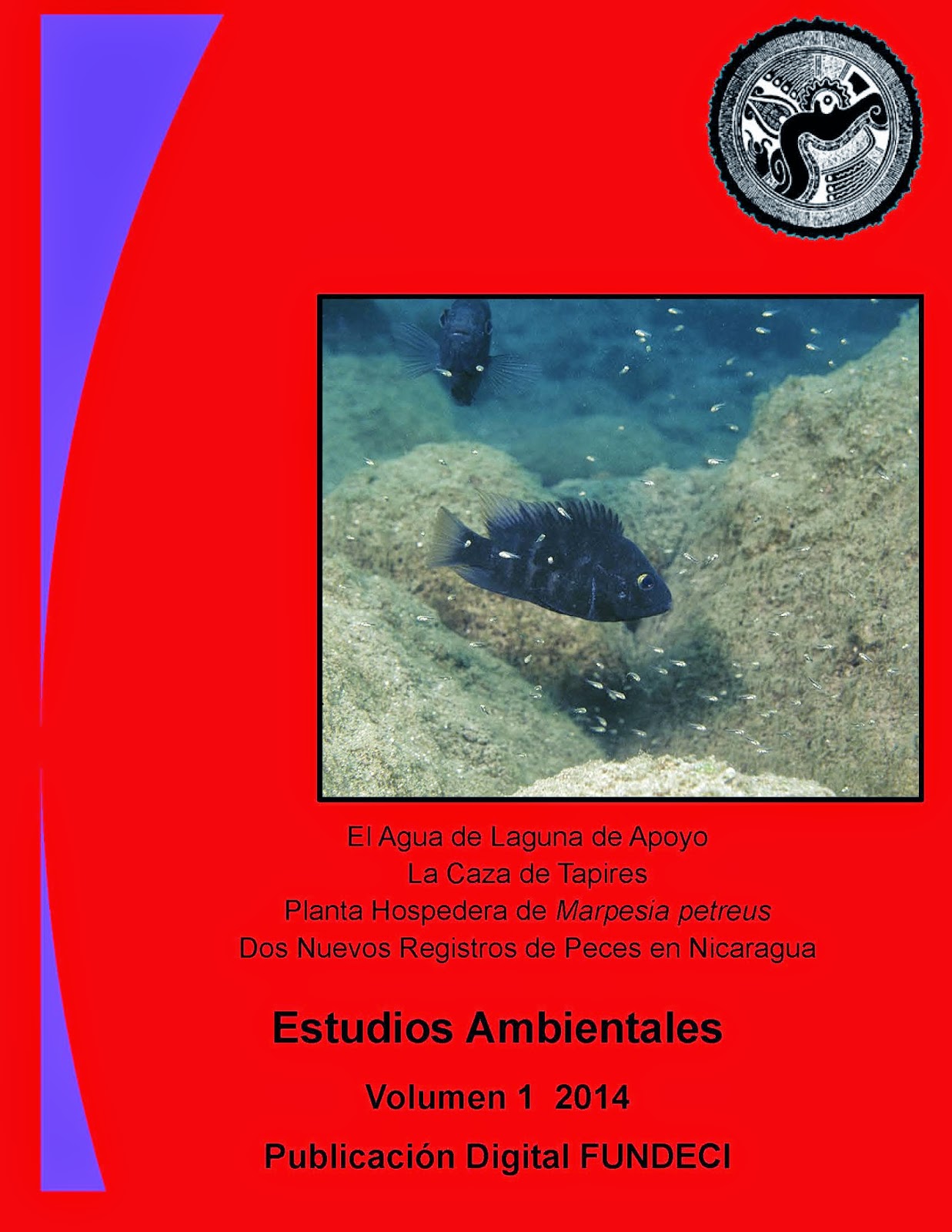
A pesar de las apariencias, las ciencias sí existen en Nicaragua y también inciden en el progreso del país. Hay docenas de científicos en Nicaragua, preparados para contribuir a estudios de varios tipos, incluyendo el campo ambiental. Para promover la comunicación científica entre científicos y los estudiosos del medio ambiente de Nicaragua,FUNDECI patrocina la revista científica Estudios Ambientales, donde aparecen contribuciones al debate cientifíco nacional.
Haga clic en la portada para conectarse con Volumen I de Estudios Ambientales.
Foto Pablo Somarriba.
La revista Estudios Ambientales ya cuenta con un número en publicación, y un equipo editorial de mucha distinción dentro y fuera del país. En el primer número, se documenta registros oficiales de la caza del danto Tapirus bairdii, de la presencia de dos especies de peces en las aguas continentales y de la asociación de una mariposa con una especie de arbol. También hay un informe especial sobre las aguas de la Laguna de Apoyo. Mas de quince diferentes autores de varias instituciones participaron. La revista se presenta en español para maximizar el acceso entre los miembros de la comunidad nacional, de forma totalmente gratis y en forma digital. La Revista Estudios Ambientales hace el llamado para la remisión de manuscritos para su segundo numero, para ser publicado durante el último cuatrimestre del 2014. Esperamos la inclusión de muchos científicos con aportes nuevos para este número.
Foto Salvador Montenegro.
Puedes contactarnos si quieres decirnos algo sobre nuestro blog, o puedes colgar un comentario abajo!
Puedes ayudarnos a proteger la naturaleza en Nicaragua, haciendo un voluntariado o donando para nuestros proyectos para proteger la naturaleza.
When people ask us what we do at Estacion Biologica Laguna de Apoyo, we often do not know where to start our response. We receive visitors from near and far. We grow trees and reforest natural areas. We offer simple, wholesome meals and lodging for those who come. We provide opportunities for volunteering in environmental and social causes. We collaborate with governmental instutions, businesses and nonprofits, and people individually and in groups to improve lives of all of us, support sustainable businesses and protect the Laguna de Apoyo Nature Reserve and the wild nature found in it.
Visitors to Laguna de Apoyo must make a trip to Catarina to see the lake from the "mirador". Photo by Sandra Wallace.
We also train. We train people to work with wildlife, to identify birds, fish, and other animals, and plants. We perform research on the environment in our area and on the wild nature found here. We involve Nicaraguan and foreign interested people in our research. We plant trees and we work with the landowners and government agencies to resolve the issues that made the trees disappear in the first place.
The biological research station "Estacion Biologica Laguna de Apoyo" is set among nature , and even the howler monkeys frequent our garden. Photo by Christine Bruxer.
We also provide opportunities for tourists to enjoy the natural beauty of Laguna de Apoyo Nature Reserve. We take visitors birdwatching and scuba diving. We maintain a beach front at Laguna de Apoyo for all to use, free of charge.
The "guardabarranco" is known in English as the Turquoise-browed Motmot (Eumomota superciliosa). Thanks to high, vertical banks along the road cut behind Estacion Biologica Laguna de Apoyo, this bird is abundant in our garden. Photo by Christine Bruxer.
We teach ourselves and others on a variety of topics, including nature, the environment, rural development, and even Spanish language and culture in Nicaragua-because, after all, any volunteer, student or professional must communicate well to work with the people!
Accomodations at Estacion Biologica are rustic and simple. Photo by Christine Bruxer.
Our accomodations in Laguna de Apoyo Nature Reserve are simple. We have fans, internet service, and electricity, but no air conditioning. We provide a great setting for someone who wishes to be near nature. We severely minimize the use of toxic chemicals such as pesticides and poisons. We try to integrate our presence into the environment with a little negative impact as possible, and we have seen the results-monkeys, woolly opossums, squirrels and warblers are often within several feet of us on our patio.
Volunteers recycled plastic bottles discarded along the beach into lightshades in Estacion Biologica Laguna de Apoyo. Photo by Christine Bruxer.
We provide opportunities for volunteers, students, and professionals to be involved in research, conservation, and educational activities. Nearly year round, we have volunteers performing reforestation, assisting in wildlife monitoring, and conducting environmental conservation and education projects. Our volunteers make a big difference in the environmental issues here.
Volunteers and scientists are enjoying breakfast at Estacion Biologica Laguna de Apoyo. Photo by Christine Bruxer.
We provide a place for people to come, enjoy, learn, participate, and relax. We operate a small hostel with very low prices, with great home-cooked meals, and the best coffee to be found anywhere. Our hostel service helps us finance our presence in Laguna de Apoyo Nature Reserve and some of the research and conservation activities we perform here. We are hardly an ordinary hostel, as is noticed by the conversations held here most evenings, drifting toward issues of wildlife, conservation, politics, culture, with meaningful voices found to contribute.
Large hollow trees such as this one provide habitat and sustenance for many animals in Reserva Natural Laguna de Apoyo. Photo by Christine Bruxer.
The presence of Estacion Biologica in Laguna de Apoyo Nature Reserve benefits the people and wildlife, too, because we serve as the eyes and ears of the area. Nearly every day, we are in communication with the park guards or other representatives of MARENA, or with some other governmental office. We have denounced and stopped several illegal constructions and other kinds of forest destruction activity.
We have begun to monitor bat populations in Laguna de Apoyo Nature Reserve, with some very interesting results. Twenty-three bat species have been found in the area, to date. We conduct lots of research on biodiversity and environmental issues. Photo by Christine Bruxer.
We provide opportunities for students and interns to gain experience in field activities, in which they get to handle wildlife and learn about their biology and behavior. The studies our students perform are part of a larger program of wildlife monitoring, in which we are examining the impacts of different forest uses on the wildlife of our area.
FUNDECI/GAIA and the students of Avon Maitland School in London, Ontario donated educational books to the Escuela Luis Alfonso Velasquez in Laguna de Apoyo Nature Reserve. Photo by Christine Bruxer.
Working in a protected natural area means working with the people, and that means improving the conditions of impoverished people. We work closely with the local school (Escuela Luis Alfonso Velasquez) to make the educational offering more effective.
This section of beachfront was reforested by FUNDECI/GAIA and is today part of the natural landscape of Laguna de Apoyo Nature Reserve. Photo by Christine Bruxer.
In all we do, we are trying to maintain Laguna de Apoyo Nature Reserve as pristine as is possible, to be passed on to the coming generations clean, unpolluted and without grave environmental problems. We can already see some successes, for which all of us should be happy and proud. The management plan for Laguna de Apoyo Nature Reserve has been approved and active patrolling occurs today. Our staff member Jeffrey McCrary was the coordinator for the Management Plan development. Howler monkeys, once exceedingly rare around Estacion Biologica, are seen daily. Neighbors are more conscious than before, and willing to work together to protect our area.
The work discussed here is an extension of our studies for over a decade on the ecology of Lake Apoyo, a volcanic crater lake in the Pacific region of Nicaragua. To learn more about the freshwater snails of Laguna de Apoyo, click here.
Marine Biologist Chris Hellyers examining gastropod snails from Laguna de Apoyo
The aquatic gastropod snail (Pyrgophorus coronatus) is an important component of the diet of native cichlid fish species and it is also a carrier of parasitic heterophyid worms. These worms have been associated with high levels of blindness of native fishes.
Gastropod snails (Pyrgophorus coronatus) with eggs attached to operculum and shell
Hellyer has been collecting snails from different habitats of the Laguna de Apoyo and studying them under the microscope looking for parasites. He is also looking at other snail traits like shell-length and fecundity (breeding activity), to see whether they vary between habitat and plant species.
Live Pyrgophorus coronatus from Laguna de Apoyo, Nicaragua. Photo by Chris Hellyer.
“One theory is that increasing levels of parasitism may be associated with ecosystem disturbance by introduced fish species and changing composition of Laguna’s aquatic plant species”, says Hellyer. “When the native Chara plants were eliminated from the lake due to introduced tilapia fish, blindness in native fish dramatically increased”.
Chara is a natural habitat for snails and they have had to seek alternative habitats and food, such as filamentous algae. This algae is a type of cyanobacteria, which are known to contain toxins that may affect organisms that consume it.
The results from this research will increase understanding of snail and parasite ecology in the Laguna and may contribute to conservation action in the future.