Spanish school, Research Station, Sustainable tourism, Ecotourism, Fish studies, Bird and other nature studies, Reforestation and Conservation Activities and Hostel in Laguna de Apoyo Nature Reserve, Nicaragua. Birdwatching, SCUBA diving, swimming, hiking, nature and wildlife watching. Hostel, great meals, great friends. Saving the planet and enjoying every minute of it!
www.gaianicaragua.org.
www.twitter.com/lagunaapoyo
Nosotros como equipo de personal de Gaia nos preocupamos por lo que piensa la gente en Nicaragua sobre la naturaleza. Desafortunadamente, mucha gente en Nicaragua piensa en serpientes con veneno mortal cuando piensan en el bosque. Invitamos a la comunidad siempre en nuestras actividades de investigación sobre los animales y la naturaleza en la Reserva Natural Laguna de Apoyo. AquÍ, presentamos unas fotos de un pequeño taller de biodiversidad de aves con jóvenes estudiantes de quinto año en el Instituto Juan José Díaz, que es el colegio para nuestros vecinos en la zona de la entrada principal a y dentro de la Reserva Natural Laguna de Apoyo.
Una joven examina una ave capturada en nuestro estudio. Foto Bart Verdick.
Los estudiantes acompañaron al campo a uno de los sitios de estudio donde una captura de aves con redes de neblina. Los estudiantes podían observar la operación de las redes y cuando se capturaba un ave, también podían observar cada individuo de cerca y aprender a manipularlos y anotar datos sobre cada uno.
Se retira de la red de neblina una ave para el estudio. Foto Bart Verdick.
En este taller, los jóvenes valoraban el trabajo técnico de campo en nuestro estudio de aves con redes de neblina, y luego consideraron las aves capturadas en las redes durante el curso de la mañana del taller.
Nicaragua necesita igualmente de científicos dedicados a estudiar y defender a la vida silvestre del país, y una sociedad conocedora y amante de las maravillas naturales del país. Cuando conocemos con la Reserva Natural Laguna de Apoyo, ya vemos que las maravillas son diversas, y no terminan con lasque se encuentran dentro del agua. Las aves de estos bosques son diversas y especiales.
El senzontle (Turdus grayi). Photo Bart Verdick.
Los participantes del taller, conducido en la Reserva Natural Laguna de Apoyo, vieron al proceso de captura, extracción de las redes, toma de datos, y inspección de las aves, y finalmente, su liberación para volver a sus actividades normales. Cuando se capturó un senzontle (Turdus grayi), los participantes apoyaron en la toma de datos y liberaron al animal a la conclusión de su observación.
Una mano joven libera al senzontle. Foto Bart Verdick.
Es doblemente importante desarrollar un afecto hacia el bosque cuando uno vive en la mera orilla de un gran monumento a la biodiversidad como la Laguna de Apoyo. Nos gusta participar en actividades con el Instituto porque lo vemos como una inversión en el futuro de esta laguna y sus bosques.
Los estudiantes preguntan a nuestro equipo de trabajo de campo sobre los estudios de aves. Foto Bart Verdick.
Contáctanos si deseas participar en un curso de especialización o una pasantía en el Programa Gaia.
Cuando pensamos en la gente de raíces humildes en Nicaragua, tenemos una tendencia de pensar que sea gente sin capacidad de actuar por si misma. En realidad, los nicaragüenses pobres hacen y dicen, escuchan y deciden. El ejemplo de Francisco Aburto, un obrero que vive en el barrio Villa Americas, demuestra como somos los nicaragüenses.
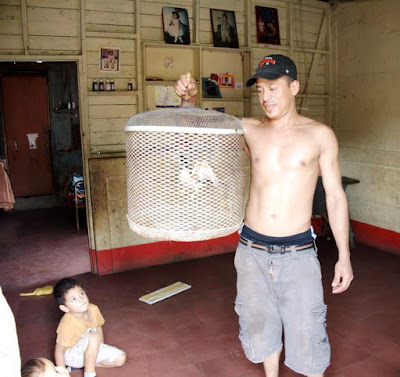
Francisco demuestra el Milano Chico rescatado en la zona oriental de Managua. Foto Jeffrey McCrary.
Francisco escuchó una bulla en un predio al lado de su sitio de trabajo en la parte oriental de Managua. Varios zanates pegaban a un animal, otro ave, y Francisco decidió salvar al animal afectado. Al tenerlo al animal golpeado en la mano, se dio cuenta que es algún tipo de ave rapaz. Se encariño con el pequeño animal y decidió buscar ayuda para que se componga y vuelva a tener su vida normal.
El deseo de ayudar al animal fue compartido entre toda la familia. Foto Jeffrey McCrary.
Francisco lo llevó a su casa y con una jaula prestada, le dio refugio. Probaba comidas, pero vio que el ave prefería ratones vivos! El instinto de cazar dominaba en el pequeño animal! Entre los miembros de su familia surgió un debate sobre qué tipo de animal es. Todos estaban de acuerdo que es un ave rapaz, pero no parece a ninguna especie que ellos conocen. Francisco mismo lanzó la hipótesis de que se trata de un Halcón Peregrino, solo que sea muy pequeño.
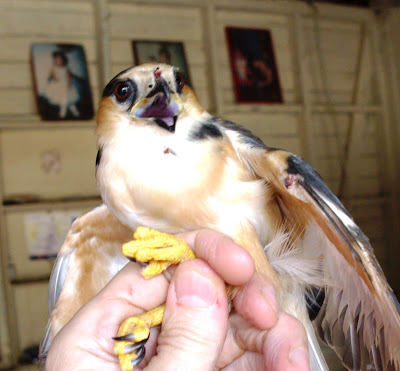
El Milano Chico se ve en excelente estado de salud. Por juvenil, tiene mucho color en el pecho. Foto Jeffrey McCrary.
Francisco y su familia mantuvo saludable al animal con muchos ratones, pero sabían que no se trataba de una mascota. El pequeño gavilán es un animal silvestre, y no quiere vivir en una jaula al anotojo de alguna persona. Por esto, buscaban ayuda para que el Milano Chico pudiera volver a vivir en su estado natural. Francisco y su familia desean que ese animalito viva y muera en el bosque, no en una jaula!
El Milano Chico es arisco, pero bello! Foto Jeffrey McCrary
Francisco y su familia no tienen mucho. Viven en un barrio obrero, sin ningún lujo, pero tienen interés en los animales y en su entorno y quieren aprender, hacer, contribuir. Gracias a ellos, este animalito tiene otra oportunidad de vivir y volar libre.
Pronto vas a estar libre! Foto Jeffrey McCrary
El Milano Chico (Gampsonyx swainsonii) es un gavilán muy poco documentado en Nicaragua. Se ven parados sobre los postes al lado del camino sobre la Carretera a León.
Por ahora, este animalito tiene una nueva casa. Y luego, a volar y no regresar. Hasta pronto! Foto Jeffrey McCrary.
As we earlier posted, a pair of Tropical Kingbirds (Tyrannus melancholicus) produced three eggs this past Mother's Day in a vigorous courtship, which has now become three rapidly-growing chicks. Both parents spend all the daylight hours defending them and providing food for them. Here, we present more photos of this growing family, with special thanks to Rebecca Brown for camera donation.
The Tropical Kingbird watches over an open area from a high perch, in plain view of the nest where three chicks are in constant desire of food. Photo Jeffrey McCrary.
Within a week of hatching, incipient wing-feathers became visible among the hair-like plumage characteristic of most nestlings. The Tropical Kingbird chicks have grown rapidly, but sleeping and eating are their only activities.
A week after hatching, these Tropical Kingbird (Tyrannus melancholicus) chicks are beginning to show flight feathers. Photo Jeffrey McCrary.
One parental bird remains with the nest at night, but both parents are seeking food for the chicks all day long. They mostly catch items on the wing, capturing all kinds of insects in the sky, grabbing arthropods from leaves or even plucking tiny fruits such as hot peppers. Although little idle time remains for the adults, they communicate constantly, bicker, and they even occasionally perform a "dance"-each flying in tandem about four meters high, from a perch, while singing.
Once the Tropical Kingbird chicks awaken, only one thing can be on their minds-food. The parents feed them small insects and fruits, and even larger insects such as butterflies and dragonflies. Photo Jeffrey McCrary.
Both parents are near the nest during all daylight hours and nothing happens there of which they are not immediately aware. They squabble with other birds, especially Social Flycatchers which have a nest only some twelve meters away. The Tropical Kingbirds are adept flyers and fearless, taking on any animal that enters its territory, even humans, who will feel their presence from behind if lingering nearby.
The orange flash colors in the crest of this Tropical Kingbird are visible when the bird feels threatened, although the chicks are all oblivious to any danger nearby. Photo Jeffrey McCrary.
Far from being free of danger, these chicks at one week of life after hatching would represent a merry morsel to most other animals. The parents must continue their protection aggressively, given that the nest and chicks are readily visible and accessible from land and air.
Upon waking, the chicks immediately open wide and beg, expecting a tasty insect or fruit. Whereas in the first couple of days, all food brought was regurgitated, the chicks now must ingest their food items without as much prior treatment. Photo Jeffrey McCrary.
The Tropical Kingbird is not only valiant, it is also somewhat tolerant of humans, permitting some great opportunities for nature photography. While by no means the rarest or most spectacular bird in Nicaragua, it is nonetheless an interesting and somewhat willing subject, and an example of what a birdwatcher can expect beyond just seeing a lot of different birds. These birds are available to the observer in both forested and altered settings, and they can make a fine show.
Parental Tropical Kingbirds both deliver food in turn throughout the day. Photo Jeffrey McCrary.
A parental Tropical Kingbird observes in loving contemplation of the chicks. Photo Jeffrey McCrary.
The chicks still have considerable growth ahead of them before fledging, and even then, dependence continues, as they learn to fly and feed themselves. This parental pair will continue to be busy for weeks to come.
Foods provided to the chicks include vegetable matter, as is shown in the bill of one of the parental units. Photo Jeffrey McCrary.
You can help us keep nature wild in Nicaragua, by volunteering your time with us or making a small donation to support
our projects in wild nature conservation.
De los cientos de especies de aves que se encuentran en Nicaragua, son pocas de personas que conocen a más de diez. Es una lástima que no hay más gente conocedora de las aves, los nicaragüenses van cambiando sus actitudes sobre la naturaleza, poco a poco. Ahora un pequeño grupo de biólogos con capacidad técnica para enfrentar los retos de identificación y estudios de aves en el campo, que sea a través de observación visual y auditiva o en la mano a través de captura de aves con redes. Estos biólogos van registrando cuáles aves se encuentran en cada hábitat en el país. Algo especial de Nicaragua es la gran cantidad de árboles en las ciudades y en muchas zonas rurales, con aves interesantes ocupando estos espacios diversos a poca distancia de los seres humanos. Hay especies comunes en las ciudades y zonas rurales que no son tan difíciles de ver, y ofrecen mucho para observar.
Esta hembra (Tyrannus melancholicus) empolla sus huevos bajo un techo de una casa. Foto Jeffrey McCrary.
El Tirano Tropical (Tyrannus melancholicus) es una especie muy común a lo largo del Pacífico de Nicaragua. Es residente durante todo el año. Como los otros güises (miembros de la familia Tyrannidae), esta especie se alimenta principalmente de insectos que son capturados en vuelo. Tiene un pico algo fuerte, relativamente ancho y plano. Cerdas por las comisuras de su boca sirven para guiar los insectos hacia su pico para mejorar su capacidad de captura. Se puede escuchar el castañeteo de su pico en persecución de algún insecto.
La hembra de una pareja de Tirano Tropical es alerta a otros pájaros que quieren comer sus huevos o tomar su nido. Foto Jeffrey McCrary.
En abril, cuando el Pacífico de Nicaragua es caliente y seco, el Tirano Tropical forma parejas. Juntos, los dos pájaros construyen el nido de forma de tasa, de lianas y ramas secas. Son muy tolerantes a los seres humanos, entonces son capaces de elegir un sitio para poner el nido muy cerca a una casa o en un sitio donde pasan muchas personas.
El nido del Tirano Tropical es de forma de taxa, expuesto a plena vista de otros animales que pueden devorar sus huevos o robar su nido ya hecho. Foto Jeffrey McCrary.
El Tirano Tropical es feroz, merecido de su nombre; agil volador y agresivo en defensa de tu territorio. La pareja se comunica mucho durante su tiempo de apareamiento, el macho y la hembra en comunicación constante. Los dos consumen insectos durante todo el día, capturándolos en vuelo en rápidos vuelos, volviendo a perchar con su presa para golpear el insecto contra una rama para matarlo y quitar sus alas antes de tragarlo.
Tres huevos manchados tiene esta pareja de Tirano Tropical. Foto Jeffrey McCrary.
Aunque el nido es a veces desocupado por los adultos, ellos siempre se encuentran cerca, vigilando siempre contra la devoración de sus huevos, robo de su nido. Otra amenaza es de las aves parásitos de nidos, que ponen huevos para que otras aves críen sus pichones.
Después de una breve salida para capturar y comer un insecto, la hembra vuelve al nido para empollar los huevos. Foto Jeffrey McCrary.
El proceso de reproducir y críar pichones exitosamente es arduoso y cargado de riesgos. Hasta las especies más abundantes como el Tirano Tropical muy pocas veces goza de ver a sus pichones tomar vuelo solos y liberarse totalmente de sus padres. La naturaleza trae muchos enemigos, entre enfermedades, depredadores, la competencia por los recursos disponibles, y para muchas especies, los atropellos a sus necesidades de vida por el ser humano.
El Tirano Tropical se hace muy visible, perchando en sitios abiertos buscando insectos para devorar. Foto Jeffrey McCrary.
El Tirano Tropical no es una ave de particular necesidad para protección, siendo una de las especies de aves de Nicaragua de mayor extensión y población. Su rango, desde el sur de Estados Unidos hasta Sudamérica, y sus amplio ranto de hábitats, desde las ciudades hasta bosques, implica una especie versátil y populosa. Pero, es valiosa su presencia al ser humano, por el gran número de insectos que come, y por el placer de sus cantos al oido y su graciosa apariencia. Es una especie excelente para observar y disfrutar desde el jardín en Managua, y sirve de indicador de la calidad ambiental de un entorno urbano.
La hembra rasca su bolsa incubadora, un espacio en el abdomen sin plumas y con mucha vascularización que se ocupa para incubar los huevos. Foto Jeffrey McCrary.
El Tirano Tropical puede disfrutar el observador con mucha o poca experiencia. Esta especie es presente en la Reserva Natural Laguna de Apoyo, especialmente en claros, por ejemplo en árboles en los bordes del camino principal. Agradecemos a Rebecca Brown por su donacion de una camara Panasonic Lumix que fue usada para tomar las fotos presentadas en este ensayo. Quieres ir a ver aves en la Reserva Natural Laguna de Apoyo con nosotros?
Blue-crowned Motmot - known in Nicaragua as the Guardabarranco. Click on picture to see video! Photo by Max Schellekens.
More than 700 bird species have been documented in Nicaragua to date. Our staff member Jeffrey McCrary, a scientist research birds in Laguna de Apoyo and other parts of Nicaragua, accompanied a group of birdwatchers organized by El Porvenir in a trip earlier this year, where they saw about half of them in just over a week of birdwatching. Click on the Blue-crowned Motmot to see a half-hour video about the trip.
Among the more common hummingbirds in the western region of Nicaragua is Salvin's Emerald, Chlorostilbon canivetii. Photo Max Schellekens.
A Salvin's Emerald doing what hummingbirds do best. Photo Max Schellekens.
Lots of wild animals in Nicaragua suffer from casual threats such as boys with slingshots. Almost all Nicaraguan boys carry slingshots and use them whenever they see an animal within reach. This pastime kills wildlife but even more wildlife manage to escape with injuries which weaken the animals and leave them as easy prey for others. Our rangers at Laguna de Apoyo Nature Reserve exercise the prohibition on slingshots, but their work is not easy, because this protected area is within walking distance of thousands of people on all sides.
This White-winged Dove suffers from an injured right wing. Photo by Pablo Somarriba.
There are many special animals, rare and endangered in our area. The White-winged Dove (Zenaida asiatica), however, is not one of them. It is among the more common of the birds in the Pacific region of Nicaragua. It is common in areas with sparse trees, inside cities and even in deserts. But as a wild animal, it deserves to live and die in its natural setting. And up close, it is a beautiful bird!
This White-winged Dove took months to recover from an injury caused by a slingshot, but it eventually recovered and flew away. Photo by Pablo Somarriba.
Taking care of wounded wildlife is frustratingly difficult. Many animals die, without any apparent reason. We kept him almost two months at Estacion Biologica Laguna de Apoyo. This bird was accompanied by another brought to us from Masaya, but the second bird succumbed to its injuries. Sometimes, we have successes, though; this bird eventually recovered and flew away to live once again in the forest.
The White-winged Dove heals from its injuries-victim of a slingshot. Photo by Jeffrey McCrary.
The White-winged Dove was content enough in the cage, but he deserved to return to the wild, if he could. After a few months, his wing was healed enough to fly. We released him, and children of the local school watched as he flew away!
Feeding and caring for rescued wildlife is not simple, and sometimes it is costly. Would you like to volunteer or donate to our wildlife rescue project? Please write us if you would.
Tookie the Toucan was conscripted to the pet trade. His last owner, however, wanted this bird to live as close to nature as possible, so we have taken him to Laguna de Apoyo Nature Reserve. He is a male Keel-billed Toucan (Ramphastos sulfuratus), and his natural habitat includes the forests behind Estacion Biologica. Although these toucans are among the most attractive animals in Nicaragua, they have a delicate disposition and strict dietary requirements. Furthermore, they count among the endangered wildlife of Nicaragua. It is against the law in Nicaragua to capture or trade this animal. We are dedicated to keeping Tookie as close to nature as possible-the species is native to our area-and we are evaluating the possibility of releasing him to the wild.
We think wild animals should not be put in cages to humor human beings. We can learn to appreciate them in the forests by birdwatching instead of placing them in cages. Toucans are not adapted to be pets as are dogs, so living in a cage is appropriate.
We would like to release Tookie and make him part of the wildlife of the Laguna de Apoyo Nature Reserve. Tookie is getting fed papayas and bananas, along with native fruits from the forest, and a supplement designed for the toucans. Keel-billed Toucans are part of the native wildlife of this area, and we often see them, particularly on the western side of the lake. Three years ago, a nesting pair of Keel-billed Toucans nested just outside Estacion Biologica, near the north shore, but generally, this bird is not found in the northern part of Laguna de Apoyo Nature Reserve. We are gauging his willingness to eat native, wild fruits, with the intention to release him if feasible.
Would you like to help us take care of Tookie? Please contact us if you would like to volunteer or make a donation to help us care for him.
Tookie is a male Keel-billed Toucan. Photo by Jeffrey McCrary
The Keel-billed Toucan diet has a delicate disposition and must be fed a restricted diet. Photo by Jeffrey McCrary
Although the Keel-billed Toucan is beautiful, it can be very aggressive and does not tame easily. This species is native to the forests of Nicaragua. Photo by Jeffrey McCrary.






.jpg "White-winged Dove")

.jpg "dove")


