Showing posts with label nature photography. Show all posts

Thursday, August 10, 2017

The Turquoise-Browed Motmot

Nicaragua does not have an officially designated national bird. Nonetheless, the Turquoise-browed Motmot (Eumomota superciliosa) is widely regarded as the national bird. Its imagery permeates the symbology of the country, even appearing on the recently issued 200-cordoba note. All Nicaraguans love this bird, to be sure. Its name in Nicaraguan Spanish is Guardabarranco, or Bank Keeper.

Eumomota superciliosa
A Turquoise-browed Motmot brings a caterpillar to the chicks in a nest on the patio of Estacion Biologica Laguna de Apoyo. Photo Jeffrey McCrary.
This year marked a first. On our, not exactly expansive, patio, a pair of Turquoise-browed Motmots decided to nest. The nest conditions they require has spawned their Nicaraguan name: They choose a horizontal hole in a dirt bank, usually previously made by small reptiles, then expand and lengthen it. The nest is protected from some kinds of potential predators by its location that can be reached only with difficulty by small, clawed animals that can scale the wall, or by flying; by the length of the nest and usually a crook in the access tunnel, which makes any trip into the tunnel treacherous; and by extreme stealth on entering and leaving the nest. 

Laguna de Apoyo Nature Reserve
The 200-cordoba note, made of plastic, features none other than the Guardabarranco.
The nest site was a drainage hole, placed in a stone retaining wall. It is shielded from easy view by a mahogany tree, but is less than two meters from every person entering and leaving Estacion Biologica. There was just enough cover from the mahogany tree to permit the birds to enter and leave without being easily noticed. 

Turquoise-browed Motmot
A juicy caterpillar is on its way to chicks in the Turquoise-browed Motmot nest. Photo Jeffrey McCrary.
Once the eggs have hatched, the real work begins. Hungry chicks demand a lot of food, with particular nutrition profiles, particularly lots of protein. Both parents hurriedly made forays into the garden below and the jungle behind in search of fruits and especially small animals.

Eumomota superciliosa
The Turquoise-browed Motmot, caterillar in tow, is waiting for its mate to emerge from the nest, to ferry more food to them. Photo Jeffrey McCrary.
We were too busy to monitor the nest constantly. Furthermore, the parents noted whether someone was observing before entering or leaving the nest. We chose to act casually, let them do their thing, and hope for the best. This species is abundant in the Laguna de Apoyo Nature Reserve, some nests are found only 40 meters from our gate, but this first use of our own property made us proud.

eumomota superciliosa
The Turquoise-browed Motmot is uncharacteristically abundant in Laguna de Apoyo Nature Reserve. Photo Jeffrey McCrary.
We never saw the chicks depart, and the large numbers of nearby birds of this species makes it impossible to state which bird came from where. Whether they survived and fledged, we can only speculate. Hopefully, because we try to make our grounds more natural and friendly to wildlife, the nesting pair was able to use a new site successfully, and perhaps we will get another visit in the future. 

One does not have to be an expert to enjoy birdwatching. If you would like to see this gorgeous bird and lots of other forest birds, ask us to provide a field guide for a short excursion. Birdwatching is an inclusive, learning and enjoying activity, in which beginners can participate. Contact us if you would like to make a birdwatching excursion. 

guardabarranco
Click on the "escudo" to contact us.


Tuesday, March 7, 2017

Birdwatching Photography in Laguna de Apoyo

Although birds are not always easily photographed in the wild, some people are up for the challenge. The following photos were taken by Lars Saenger, who spent two weeks studying at Apoyo Spanish School and watching nature inside the Laguna de Apoyo Nature Reserve. These photos demonstrate that the area is great for practicing nature photography.
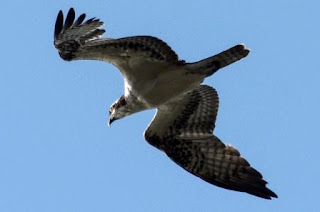
Osprey
Osprey (Pandion haliaetus

Osprey (Pandion haliaetus) populations found in Nicaragua do not breed locally. The entire Osprey population of Nicaragua is regarded as migratory, nesting further north. Some birds pass through Nicaragua on migratory trips, but many choose the ample aquatic ecosystems to fish in Nicaragua until moving northward for another reproductive period. Ospreys feed almost entirely on fish plucked from the surface of water. Even though the Osprey does not nest in Nicaragua, there are always a few individuals present in Laguna de Apoyo, most likely immatures that remain behind in their southern range until ready for reproduction.

Hoffmann's Woodpecker
Hoffmann's Woodpecker (Melanerpes hoffmannii)
Most of the bird species found in Nicaragua have wide ranges, often spanning many countries. Some, however, are found in more restrictive ranges, within an ecosystem. One such bird species, Hoffmann's Woodpecker (Melanerpes hoffmannii), is located only in Honduras, Nicaragua, and Costa Rica. The species prospers in both open areas with plenty of trees and natural forest areas in the tropical dry forest region of Nicaragua. Laguna de Apoyo Nature Reserve is an ideal habitat for the bird, which is a close relative to and shares many superficial characteristics with the Red-Bellied Woodpecker (Melanerpes carolinus), a species common through much of the eastern United States. Hoffmann's Woodpecker is active in most areas of the reserve year-round, including both the deepest forest areas and built areas with houses.

birdwatching
Great-tailed Grackle (Quiscalus mexicanus)
Some birds prefer to inhabit areas without human influence, but others may be particularly attracted to humans. One bird that responds positively to human impacts on the forest is the Great-tailed Grackle (Quiscalus mexicanus). They tend to be active throughout the day, loud and ebullient, and many other species do not prosper in their presence. They are not found deep into the forest.

hummingbird
Cinnamon Hummingbird (Amazilia rutila), feeding on the nectar of Tabebuia rosea
Hummingbirds are always loved by birdwatchers. Their precise movements and delicate forms inspire awe among anyone who sees them. Among the most common hummingbird species in Laguna de Apoyo Nature Reserve is the Cinnamon Hummingbird (Amazilia rutila). It and other hummingbirds consume nectar from flowers, as everyone knows; what fewer people appreciate, however, is that hummingbirds also consume very small arthropods, which they may glean from the air. One example of such prey is the juvenile spiders, that may actually be transported by the wind. The Cinnamon Hummingbird will feed on tiny spiders, often gleaning them from foliage and flowers. This bird species is common particularly near humans, and is even found in peri-urban areas of Managua.

birdwatching in Nicaragua
Boat-billed Flycatcher (Megarhynchus pitangua)
Many species of tyrant flycatchers have been documented in Laguna de Apoyo Nature Reserve, among them, the Boat-billed Flycatcher (Megarhynchus pitangua). At first glance, it resembles the Great Kiskadee (Pitangus sulfuratus), but without cinnamon wing-feathers, and with a much more formidable peak and distinctive calls. It can be found in open areas as well as within a relatively closed canopy.

motmot
Turquoise-brlowed Motmot (Eumomota superciliosa)
The bird most adored by Nicaraguans is the Turquoise-browed Motmot (Eumomota superciliosa). This lovely species is very common in Laguna de Apoyo Nature Reserve, likely because of the abundant sites for nesting available. The species makes nests in tunnels carved horizontally into loose clay and ash deposits in the steep banks in ravines and road cuts. This site may be among the best to find the species in the entire country.

Dusky-capped Flycatcher
Dusky-capped Flycatcher (Myiarchus tuberculifer)
Among the numerous species of tyrant flycatchers in Laguna de Apoyo Nature Reserve, is the Dusky-capped Flycatcher (Myiarchus tuberculifer). Its genus consists of several species, some of which are quite difficult to distinguish at a distance. It is common throughout the reserve.

Montezuma Oropendola
Montezuma Oropendola (Psarocolius montezuma)
Birdwatchers never tire of watching the Montezuma Oropendola (Psarocolius montezuma), especially around a nesting colony. Dozens of nests in the form of woven socks are constructed in a single tree, where the birds engage in highly social behavior among the nesting group. Nesting occurs during the dry season, sometimes starting as early as November, with as many as one hundred birds gathered into a single site! An oropendola colony is always a birdwatching paradise.

Please contact us for a birdwatching tour in Laguna de Apoyo Nature Reserve or anywhere in Nicaragua. We organize expeditions in all locations of the country, and we would love to take you!

birdwatching
Click on the "escudo" to contact us at Gaia.


Wednesday, July 15, 2015

Migratory Birds II: Mist net studies in Laguna de Apoyo Nature Reserve, Nicaragua

Everyone is aware of how some bird species are quite evident and others are incredibly reclusive and difficult to note. This difference extends into most natural habitats that the birds use, especially forest habitats where birds can find lots of different places and ways to avoid detection. Birds are somewhat uniform anatomically, however, there are about ten thousand existing species, each with some distinguishing features, showing how feathers along with other features can make such a large number of distinctions which serve to fit ecological niches for feeding, defense and predator avoidance, migration, compatibility with the elements, and reproduction.

We have conducted several cycles of mist netting studies of the birds of Laguna de Apoyo Nature Reserve in Nicaragua, where there are tropical dry forest habitats facing several levels of human intervention. We have noted how several species of birds can be found commonly in one of our study sites but rare or almost not at all in another site of different vegetation structure and composition. The following are a sampling of the migratory birds that appear in our nets in our studies.

birds
Indigo Bunting (Passer cyaneus) males are not nearly so spectacular on the wintering grounds as they are during breeding season. Photo Pier-Oliver Boudreault.
This remarkable partitioning of the habitats of the reserve is also noted among migratory birds. About a quarter of all the bird species found in Nicaragua conduct well-defined, seasonal migrations, in which nesting occurs in a northward habitat during the North American summer, and leaves the area along with most or all the birds of the same species southward for several months, once the chicks have hatched, fledged and gained independence. The birds remain in a southern habitat until time to return to the nesting grounds again.

Laguna de Apoyo Nature Reserve offers winter habitats to many migratory bird species which nest further north. One example is the Indigo Bunting (Passerina cyanea), which nests as far south as extreme northern Mexico, but all the birds of this species disappear move southward into a range extending from central Mexico , the southern tip of Florida, throughout the Antilles and to Panama.

The male Indigo Bunting is appropriately named for its attractive, practically solid blue coloration exhibited during reproduction. A feather molt in the fall, however, leaves the males with mostly drab, brown color, with some deep blue highlights. Hence, the male Indigo Bunting only uses the bright colors during reproduction and maintains a muted appearance when in Nicaragua, which may be driven by predator avoidance and possibly direct physiological costs to produce and maintain the bright plumage.

The female Indigo Bunting is never brightly colored, and lacks the blue wash seen in the male when not in reproductive plumage. Many bird species use color dimorphism in which males demonstrate their reproductive fitness with bold colors and plumage as secondary sexual characteristics which the females use in mate selection. Presumably, a male which will sire offspring more successfully will also have a nice wardrobe.

indigo bunting
This male Indigo Bunting is an adult with well-developed flight feathers, with rounded tips. Photo Pier Boudreault. 

Passerina cyanea
This female Indigo Bunting insisted on a fight so she got one-with the stem of a leaf. Photo Pier Boudreault. 
As a seed-eating species, the Indigo Bunting is generally found in open areas, where grasses may be found around large trees for perching and refuge. This species is found less often in the deeper forest.

In contrast to the Indigo Bunting, the Black-and-White Warbler (Mniotilta varia) feeds on insects found on the bark of trees, especially on the trunk and vertical limbs. It prefers more closed forest canopy and tends to stay low in the forest, climbing along on the trunk, then flying to another, nearby tree to land on the trunk and continue foraging. Its plumage is by no means camouflage for the bird, and there are more bold patterns on the male than on the female, in obvious use in mate selection. 

Like the Indigo Bunting, the Black-and-White Warbler breeding range, in eastern US and Canada, does not overlap with its winter range, which encompasses the extreme southern US, Mexico and Central America, and the Antilles and extreme northern South America. 
Mniotilta varia
Female Black-and-White Warbler. Photo Vera Neumann.

Another group of migratory birds which spend winter in Laguna de Apoyo Nature Reserve are found in the thrush family (Turdidae). In its breeding range, the Wood Thrush (Hylocichla mustelina) is known particularly for its haunting song, which is not given on its winter range. How fortunate are those who hear its song, for as Henry David Thoreau wrote, "wherever he hears it, it is a new world and a free country, and the gates of Heaven are not shut against him." Unlike the other two birds mentioned above, there are no significant differences in plumage between the sexes in this species. This species can be found foraging on the open ground beneath the shade of large trees, in similar actions to the common resident Clay-colored Thrush (Turdus grayi). 

Hylocichla mustelina
Wood Thrush. Photo Pier-Oliver Boudreault.
Less striking in appearance is another migratory thrush: the Swainson's Thrush (Catharus ustulatus), which is common in shaded areas in the Laguna de Apoyo Nature Reserve. Like the Wood Thrush, the sexes are similarly colored. Its muted color pattern may be of great advantage, especially when foraging on the ground, as it provides an even greater degree of camouflage than the Wood Thrush. The breeding range, across much of the US and Canada, is completely abandoned by this species during the winter. Birds from the western US and Canada pass the winter from Mexico into Costa Rica, whereas birds from the eastern US and Canada migrate across the Caribbean to Panama and South America for winter.


Swainson's Thrush
The Swainson's Thrush (Catharus ustulatus) is frequently captured by mist nets in appropriately shaded habitats in Laguna de Apoyo Nature Reserve. Photo Pier-Oliver Boudreault.

Another family of migratory landbirds consists of the tanagers, which are distributed into multiple families in spite of similar external characteristics. The Western Tanager (Piranga ludovicianus) has recently been placed in the cardinal family (Cardinalidae). It is less common than the Summer Tanager (Piranga rubra), and has a similar but less melodic, more raspy call on its winter habitat. The Western Tanager tends to stay close to the top of tall trees, coming down to lower levels only occasionally, for which we have relatively few capture records.

The mature male Western Tanager has a red head which fade to yellow neck and throat and olive-yellow body, over which bold black markings are found on the wings. The females lack red on the head and have fewer wing markings. As in many species, the males attain adult plumage after the first winter season, during which only vestiges of the adult male color pattern are noted. This species prefers more well-developed forest structure in Laguna de Apoyo Nature Reserve.

Piranga ludoviciana
Immature male Western Tanager. Photo Vera Neumann.
Not all migratory birds spend winter in Nicaragua and breed further north. One bird which breeds in Nicaragua during the US summer months and then migrates to South America in September is the Sulfur-bellied Flycatcher (Myiodynastes luteiventris). The forests in Laguna de Apoyo Nature Reserve will be punctuated by its squeaky call, which can be compared to a child's squeaky bathroom toy. As a tyrant flycatcher (Family Tyrannidae), it catches insects in flight in open areas, whether above trees in the canopy or over clearings, making sallies from perches at medium or high levels in trees.

Sulphur-bellied flycatcher
Sulphur-bellied Flycatcher (Myiodynastes luteiventris). Photo Marlene Krone.
The tyrant flycatchers are generally very aggressive birds, vigorously defending nesting territories from any bird or other animal it perceives to be a threat. Among the defense mechanisms is the use of its bright orange mouth, which it displays to frighten any threatening animal. A yellow flash can also be seen on the crest when excited.

Sulphur-bellied flycatcher
Sulfur-bellied Flycatcher. Photo Vera Neumann.
Migrating birds enjoy a special legal status internationally, thanks to the increasing recognition of the special needs involved in twice-yearly migrations. Among the oldest of legislation to protect wildlife is the Migratory Bird Treaty Act, signed by the US government in 1918. Although Nicaragua is not a co-signatory on this or other, similar legislation, foreign investment may require all the stipulations in this law to be applied, even when the investment is made in Nicaragua.

migratory birds
Click on the "escudo" to contact us.


Saturday, July 11, 2015

Bird Studies in Laguna de Apoyo Nature Reserve, Nicaragua: Long-tailed Manakin

Gaia has conducted studies of the birds of Laguna de Apoyo Nature Reserve now several years, during this period more than 225 bird species have been documented and some very interesting trends have been noted. One important finding is that the reserve is an important host for a very special bird, the Long-tailed Manakin (Chiroxiphia linearis). This small, reclusive bird is found in the canyons, at low and middle levels of the forest, beneath the cover of canopy.

Long-tailed Manakin
The adult male Long-taile Manakin is jet-black with a baby-blue back and crimson-red head. Two long tail-covert feathers stream behind the bird. Photo Pier-Oliver Beaudrault. 
 Although this species is uncommon in open areas, it is easily heard in its shaded habitat, with unique calls and songs that let one know where it can be found. Although the adult males are spectacular, with brilliant red head, baby blue back and bright orange legs, it can still be missed because it moves little, often remaining still for long periods, and prefers deep shade.

Juveniles and females are even more difficult to sight, because the base color is olive green. Once the bird is sighted, the legs are often the diagnostic feature, because of the angle of view and limited light where the bird is perched.
birdwatching
An immature male Long-tailed Manakin is just beginning to show blue on the back. Photo Joe Taylor.
We usually think of small birds reaching sexual maturity after one year and perhaps only living two or a few years. The long-tailed Manakin is distinctly long-lived. The males, in fact, only reach sexual maturity after four years, during which their changes in plumage occur in several stages. Two or three males work together to perform a song and dance to attract the females, and the females choose the group with the most accomplished performance. The senior male of the group mates and the others await their turn to move up in the hierarchy. Females build nests and raise young alone.

Chiroxiphia linearis
A male Long-tailed Manakin captured in a mist net. This is among the most commonly captured bird species in Laguna de Apoyo Nature Reserve. Photo Lukas Betthaueser.
The Gaia mist netting studies of birds in Laguna de Apoyo Nature Reserve is finally yielding some useful data, after several years of capturing thousands of birds. The Long-tailed Manakin counts among the most frequently captured bird species, in the most densely forested sites, although its capture numbers are considerably lower where the forest canopy is incomplete and undergrowth is removed. We are just learning which birds are the most important species in the reserve, and definitely, the Long-tailed Manakin ranks highly.

Long-tailed Manakin
A female Long-tailed Manakin. Photo Joe Taylor.
Laguna de Apoyo Nature Reserve is an interesting location to study this species, as it has a very high population density in some locations, where as many as 20 individuals have been captured in a three-day period. The high population found in our study area is also interesting because of its proximity to the southern range limit of the species, found in northwestern Costa Rica.

birds
An adult male Long-tailed Manakin has lent a few minutes of his time to our scientists for study. Photo Pier-Oliver Beaudrault.
In our next phase of study of this species, we hope to undertake population dynamics and nesting success. If you are interested in participating in bird studies in Laguna de Apoyo Nature Reserve, we would love to work with you. This is also a relatively easy bird to find, and we would love to take you on a birdwatching excursion. Please contact us if you would like to volunteer or undertake an internship in the study of this bird or other birds in the area or simply to go birdwatching with one of our expert guides.

Long-tailed Manakin
Two male Long-tailed Manakins in a courtship ritual. Photo Jesse Bickley and Anna James.
Chiroxiphia linearis


Tuesday, May 19, 2015

Tropical Kingbird III: Feeding the babies

As we earlier posted, a pair of Tropical Kingbirds (Tyrannus melancholicus) produced three eggs this past Mother's Day in a vigorous courtship, which has now become three rapidly-growing chicks. Both parents spend all the daylight hours defending them and providing food for them. Here, we present more photos of this growing family, with special thanks to Rebecca Brown for camera donation.
birdwatching
The Tropical Kingbird watches over an open area from a high perch, in plain view of the nest where three chicks are in constant desire of food. Photo Jeffrey McCrary. 
Within a week of hatching, incipient wing-feathers became visible among the hair-like plumage characteristic of most nestlings. The Tropical Kingbird chicks have grown rapidly, but sleeping and eating are their only activities.

baby birds
A week after hatching, these Tropical Kingbird (Tyrannus melancholicus) chicks are beginning to show flight feathers. Photo Jeffrey McCrary.
One parental bird remains with the nest at night, but both parents are seeking food for the chicks all day long. They mostly catch items on the wing, capturing all kinds of insects in the sky, grabbing arthropods from leaves or even plucking tiny fruits such as hot peppers. Although little idle time remains for the adults, they communicate constantly, bicker, and they even occasionally perform a "dance"-each flying in tandem about four meters high, from a perch, while singing.
tropical kingbird
Once the Tropical Kingbird chicks awaken, only one thing can be on their minds-food. The parents feed them small insects and fruits, and even larger insects such as butterflies and dragonflies. Photo Jeffrey McCrary.
Both parents are near the nest during all daylight hours and nothing happens there of which they are not immediately aware. They squabble with other birds, especially Social Flycatchers which have a nest only some twelve meters away. The Tropical Kingbirds are adept flyers and fearless, taking on any animal that enters its territory, even humans, who will feel their presence from behind if lingering nearby.
birdwatching nicaragua
The orange flash colors in the crest of this Tropical Kingbird are visible when the bird feels threatened, although the chicks are all oblivious to any danger nearby. Photo Jeffrey McCrary.
Far from being free of danger, these chicks at one week of life after hatching would represent a merry morsel to most other animals. The parents must continue their protection aggressively, given that the nest and chicks are readily visible and accessible from land and air.
baby birds
Upon waking, the chicks immediately open wide and beg, expecting a tasty insect or fruit. Whereas in the first couple of days, all food brought was regurgitated, the chicks now must ingest their food items without as much prior treatment. Photo Jeffrey McCrary.
The Tropical Kingbird is not only valiant, it is also somewhat tolerant of humans, permitting some great opportunities for nature photography. While by no means the rarest or most spectacular bird in Nicaragua, it is nonetheless an interesting and somewhat willing subject, and an example of what a birdwatcher can expect beyond just seeing a lot of different birds. These birds are available to the observer in both forested and altered settings, and they can make a fine show.
birdwatching
Parental Tropical Kingbirds both deliver food in turn throughout the day. Photo Jeffrey McCrary.

tyrannus melancholicus
A parental Tropical Kingbird observes in loving contemplation of the chicks. Photo Jeffrey McCrary.
The chicks still have considerable growth ahead of them before fledging, and even then, dependence continues, as they learn to fly and feed themselves. This parental pair will continue to be busy for weeks to come. 
tyrannus melancholicus
Foods provided to the chicks include vegetable matter, as is shown in the bill of one of the parental units. Photo Jeffrey McCrary.
We at FUNDECI/GAIA organize birdwatching tours in Laguna de Apoyo Nature Reserve and elsewhere, and we would love to take you on a birdwatching excursion. Even common birds such as the Tropical Kingbird can make a marvelous camera model and give plenty to watch. This is only one of more than 220 bird species found in Laguna de Apoyo Nature Reserve and more than 700 species in Nicaragua. Please contact us if you would like to go birdwatching with us, or if you would like to participate in bird research or monitoring with us.


You can help us keep nature wild in Nicaragua, by volunteering your time with us or making a small donation to support our projects in wild nature conservation.


Click on the "escudo" to contact us. 

Monday, May 11, 2015

Mother's Day present to a pair of Tropical Kingbirds

Although the selected day differs from country to country, May is the month in which our mothers are remembered. It is fitting that many birds in the tropics hatch in this month, too. The always-vigilant Tropical Kingbird has hatched three eggs successfully on the afternoon of US Mother's Day, 10 May 2015. All eggshells and debris have been removed from the nest, and the chicks are being fed regurgitated insects.

birdwatching Nicaragua
Three baby Tropical Kingbirds (Tyrannus melancholicus) in their first day since hatching. Photo Jeffrey McCrary.
The pair of Tropical Kingbirds have vigilantly guarded their three eggs since 24 April, against doves, grackles, and even squirrels. Nest parasites such as cuckoos and Melodious Blackbirds are abundant in the area, but the vigilance of these feisty flycatchers is rewarded by not being stuck with a parasitic egg. Both parents are continuously present and attentive to their nest.

birds
Feeding time! Photo Jeffrey McCrary.
One can not always be in the jungle, but this small miracle of life is a reminder that even urban birdwatching can also bring some special rewards.
Tropcial Kingbird
Tyrannus melancholicus caring for eggs. Photo Jeffrey McCrary.
The female Tropical attentive mother, as the following video demonstrates:


And parents quarrel among all species, even on Mother's Day!


Please contact us and let us know what you think of our blog, or post a comment below! 

You can help us keep nature wild in Nicaragua, by volunteering your time with us or making a small donation to support our projects in wild nature conservation.

Tropical Kingbird
Click on the "escudo" to contact us. 

Sunday, May 3, 2015

Aves de Nicaragua: El Tirano Tropical

De los cientos de especies de aves que se encuentran en Nicaragua, son pocas de personas que conocen a más de diez. Es una lástima que no hay más gente conocedora de las aves, los nicaragüenses van cambiando sus actitudes sobre la naturaleza, poco a poco. Ahora un pequeño grupo de biólogos con capacidad técnica para enfrentar los retos de identificación y estudios de aves en el campo, que sea a través de observación visual y auditiva o en la mano a través de captura de aves con redes. Estos biólogos van registrando cuáles aves se encuentran en cada hábitat en el país

Algo especial de Nicaragua es la gran cantidad de Ã¡rboles en las ciudades y en muchas zonas rurales, con aves interesantes ocupando estos espacios diversos a poca distancia de los seres humanos. Hay especies comunes en las ciudades y zonas rurales que no son tan difíciles de ver, y ofrecen mucho para observar. 


Nicaragua
Esta hembra (Tyrannus melancholicus) empolla sus huevos bajo un techo de una casa. Foto Jeffrey McCrary.
El Tirano Tropical (Tyrannus melancholicus) es una especie muy común a lo largo del Pacífico de Nicaragua. Es residente durante todo el año. Como los otros güises (miembros de la familia Tyrannidae), esta especie se alimenta principalmente de insectos que son capturados en vuelo. Tiene un pico algo fuerte, relativamente ancho y plano. Cerdas por las comisuras de su boca sirven para guiar los insectos hacia su pico para mejorar su capacidad de captura. Se puede escuchar el castañeteo de su pico en persecución de algún insecto. 


tirano tropical
La hembra de una pareja de Tirano Tropical es alerta a otros pájaros que quieren comer sus huevos o tomar su nido. Foto Jeffrey McCrary.
En abril, cuando el Pacífico de Nicaragua es caliente y seco, el Tirano Tropical forma parejas. Juntos, los dos pájaros construyen el nido de forma de tasa, de lianas y ramas secas. Son muy tolerantes a los seres humanos, entonces son capaces de elegir un sitio para poner el nido muy cerca a una casa o en un sitio donde pasan muchas personas. 


Tyrannus melancholicus
El nido del Tirano Tropical es de forma de taxa, expuesto a plena vista de otros animales que pueden devorar sus huevos o robar su nido ya hecho. Foto Jeffrey McCrary.
El Tirano Tropical es feroz, merecido de su nombre; agil volador y agresivo en defensa de tu territorio. La pareja se comunica mucho durante su tiempo de apareamiento, el macho y la hembra en comunicación constante. Los dos consumen insectos durante todo el día, capturándolos en vuelo en rápidos vuelos, volviendo a perchar con su presa para golpear el insecto contra una rama para matarlo y quitar sus alas antes de tragarlo. 


huevo
Tres huevos manchados tiene esta pareja de Tirano Tropical. Foto Jeffrey McCrary.
Aunque el nido es a veces desocupado por los adultos, ellos siempre se encuentran cerca, vigilando siempre contra la devoración de sus huevos, robo de su nido. Otra amenaza es de las aves parásitos de nidos, que ponen huevos para que otras aves críen sus pichones. 


guis
Después de una breve salida para capturar y comer un insecto, la hembra vuelve al nido para empollar los huevos. Foto Jeffrey McCrary.
El proceso de reproducir y críar pichones exitosamente es arduoso y cargado de riesgos. Hasta las especies más abundantes como el Tirano Tropical muy pocas veces goza de ver a sus pichones tomar vuelo solos y liberarse totalmente de sus padres. La naturaleza trae muchos enemigos, entre enfermedades, depredadores, la competencia por los recursos disponibles, y para muchas especies, los atropellos a sus necesidades de vida por el ser humano. 

aves en Nicaragua
El Tirano Tropical se hace muy visible, perchando en sitios abiertos buscando insectos para devorar. Foto Jeffrey McCrary.
El Tirano Tropical no es una ave de particular necesidad para protección, siendo una de las especies de aves de Nicaragua de mayor extensión y población. Su rango, desde el sur de Estados Unidos hasta Sudamérica, y sus amplio ranto de hábitats, desde las ciudades hasta bosques, implica una especie versátil y populosa. Pero, es valiosa su presencia al ser humano, por el gran número de insectos que come, y por el placer de sus cantos al oido y su graciosa apariencia. Es una especie excelente para observar y disfrutar desde el jardín en Managua, y sirve de indicador de la calidad ambiental de un entorno urbano. 

ave
La hembra rasca su bolsa incubadora, un espacio en el abdomen sin plumas y con mucha vascularización que se ocupa para incubar los huevos. Foto Jeffrey McCrary.
El Tirano Tropical puede disfrutar el observador con mucha o poca experiencia. Esta especie es presente en la Reserva Natural Laguna de Apoyo, especialmente en claros, por ejemplo en Ã¡rboles en los bordes del camino principal. 

Agradecemos a Rebecca Brown por su donacion de una camara Panasonic Lumix que fue usada para tomar las fotos presentadas en este ensayo. Quieres ir a ver aves en la Reserva Natural Laguna de Apoyo con nosotros? 
Haz 'clic' en el escudo para contactarnos.